Ramping and not ramping in casual commander
A discussion on the merits of ramping and not ramping in casual commander.
TL;DR:
- mass land denial being banned in most forms of casual commander means that ramping with lands will never be “undone.”
- Ramping with creatures, artifacts, or enchantments can be “undone” via boardwipes. The more you rely on non-land forms of ramp, the more susceptible you are to blowouts.
- Playing on curve is powerful, but is vulnerable to sweepers. Thus, in environments where mass disruption is plentiful, relying on non-land forms of ramp can backfire.
- Magic cards don’t scale linearly in power and value; playing two spells for a total mana value of 4 on T6 after a board reset is much weaker than playing two spells for total mana value of 10.
- Rebuilding after a board reset is much easier when you have more mana and high-mana value pieces in your deck.
A short preamble
Discourse tends to be cyclical, this applies to serious topics and not-so-serious topics alike. I consider Magic: the Gathering to be a fairly frivolous topic, and Commander/EDH is the most frivolous format in a frivolous game. I use that as a preamble to insulate myself from hyperspecific anecdotal rebuttals—which is to say that any discussion surrounding “casual” commander is inherently silly. More than silly, it’s variable in ways that make comparative discussion extremely difficult. People who play in local friend groups inevitably develop their own metas, people who play mostly with randoms at LGS are prone both to sampling bias and are still beholden to general store-specific local metas, and so on and so forth. If your initial instinct to reading this post is to say “none of this would ever hold up in my pod/store/meta, idiot,” your anecdotal experience is probably correct!
Ramping or not ramping in commander
Ramp in commander is a point of discussion that, at least in my social media diet, crops up once every few months. In this specific instance, I believe the most recent swath of debate was spawned by this short by VeggieWagon, who is part of the Decked Out EDH Youtube channel:
First, I’ll clarify that we are talking about casual commander, primarily brackets 2 and 3. Brackets 4 and 5 operate differently.
I’ll note that Veggie’s definition of “mana rock” is loose: he defines “any spell in your deck whose sole purpose is to make more mana per turn” as a mana rock. (He has some exceptions: he says that Nature’s Lore in a Landfall deck is not a mana rock because it also unlocks other inherent synergies. He also says that spells that are permanents that produce more mana than they cost—primarily these are the mana-positive mana rocks that you only see in CEDH, outside of Sol Ring (Chrome Mox, Mox Diamond, etc)—don’t count for him. I think this is reasonable, as these cards don’t see play in casual, and rituals are a whole separate beast.
That is to say that Veggie’s point is about ramp on the whole, not just mana rocks, as his definition encompasses land ramp, mana dorks, mana rocks, Wild Growth-esque auras, cost reducers, and treasure generation, etc. He goes on to say that he has abandoned pure mana generation in favor of more synergistic game pieces that fill multiple roles: treasure generators or cost reducers on creatures, which can block or attack, interaction that hits each opponent (often ridding them of their mana generators), and more.
Where Veggie says “mana rock,” I’ll use the term “ramp” instead: my definition of ramp is any form of sustainable permanent-based mana generation. I think that the most useful framework to categorize different forms of ramp is to ask the question, how likely is it that my ramp will be undone as the game progresses?
This ends up being pretty simple. In brackets 2 and 3, mass land destruction is banned. So:

Lands: if you ramp a land onto the battlefield, it is exceedingly unlikely that your land will be removed from the battlefield without being replaced. Ex: Farseek, Cultivate, Explosive Vegetation, Wood Elves, etc.
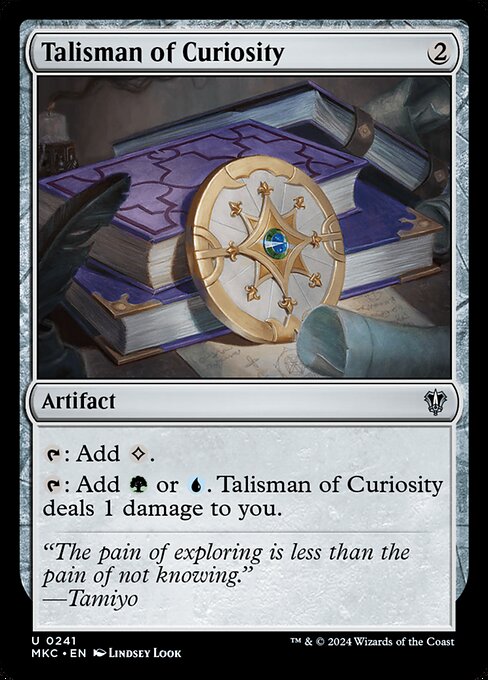
Artifacts and enchantments: mana rocks, auras that enchant lands, repeatable treasure token generators. It’s rare that someone will actively snipe a talisman or signet with targeted removal, but it’s certainly not unheard of a Vandalblast or Austere Command to destroy all mana rocks on the board and set the non-green players back significantly.

Creatures: the most vulnerable form of ramp. A T1 Llanowar Elves into a T3 Selvala, Heart of the Wilds into casting your 5-drop commander on T3 feels incredible…until the Rakdos player gets antsy and taps out to cast Blasphemous Act, probably 5-for-1-ing the board at least. This is a brutal setback, and given most green decks require power or density of creatures on the board to refill their hand, this can knock a player out of the game, or at least leave them at the mercy of their opponents. Of note, mana dorks aren’t strictly the only kind of creature that count here: cards like Glóin the Mighty, Tireless Provisioner, and Goblin Electromancer also qualify, insofar as what groups these cards together is their susceptibility to the most commonly played sweepers in the format, not the exact mechanism by which they “produce” mana.
Why do these distinctions matter?
Magic is a game about resource generation. The most important resources are cards (draw) and mana (ramp). Life total, power, toughness, quantity of blockers, etc are all also resources, but are secondary to cards and mana. One of the things that makes card draw and mana generation powerful is that they “trade well.”

Forcing opponents to discard is rare in commander. Thoughtseize-effects only affect one opponent for one card. Cards like Mind Twist can force multiple discards but is somewhat socially frowned upon, as it tends to set two people back significantly (the caster and target of Mind Twist) while leaving two players unaffected, it tends to be more of a kingmaking scenario more than anything else. Hand attacking as a strategy is viewed as unfun, which makes it rare in brackets 2-3, wheels as a strategy is much more common.
And, as discussed above, mass land denial/destruction is banned in these brackets. It’s very difficult for your opponents to “trade” with your card draw and ramp in commander. If Player A draws 3 cards off of Harmonize (3 cards for 1), it’s very unlikely that they get hit with a Mind Twist for X=3 (which would be an opponent losing 3 cards for the cost of 1). If a player casts Explosive Vegetation, the likelihood of those two lands getting destroyed in these brackets is almost 0 (flash speed tutor hate aside).
In theory, aggro or voltron decks combat this by pressuring life totals early and going for player eliminations, but the “turn to lose” clause in brackets sometimes causes issues here (a topic for another time).

Many spells can easily 2+ for 1 other permanents in terms of value. An edict effect is often a strong play early in the game before fodder clogs up the table, and a well-calculated boardwipe from a sandbagging player is a huge swing in value. In contrast, there are very few spells that “reset” the game to a certain number of lands, or reset player’s hands.
Finally, non-land permanent based forms of value are easier to disrupt than lands, ramp spells, or draw. Removal spells are more plentiful than counterspells, which means your Tireless Provisioner or Generous Plunderer is more likely to be removed than your Harmonize or Explosive Vegetation is to be countered. Synergy engines are powerful, but suffer more from pinpoint removal than draw spells or land ramp.
In conclusion: land ramp is rarely denied and even more rarely undone. It’s much easier to draw cards than it is to force opponents to discard. Comparatively, removal spells trade 1 for 1 with permanents, or trade at even better rates; if you use non-land permanents for mana generation, you are susceptible to these “bad trades.”
Spells in Magic (sort of) scale nonlinearly with cost
This final point is a bit looser than the others. It’s pretty clear that higher mana value = higher cost = “stronger” spells. This is a general design paradigm Magic tries to follow: higher costs have higher rewards.
In competitive metagames, the point is to win. That means avoiding cards that are overcosted and abusing cards that are undercosted. Because the designers are humans and make mistakes, most formats have these outliers. One need only look at the Standard banlist to see these design mistakes.

Casual commander has a different philosophy. Some of the most mana-efficient or overly powerful cards are Game Changers or are socially shunned more than they are explicitly banned. Standard was warped around Badgermole Cub, cEDH is centered on Rhystic Study, but in casual, these metagame lynchpins don’t have as much of a heavy focus because the point isn’t to win at all costs. Thus, casual deckbuilding and gameplay tends to honestly be a bit more like sealed or draft in this sense, where bombs and synergies matter more than strategies centered around cheap, “broken” cards.
Imagine you are a synergy-focused deck that mostly cares about putting permanents out on the board on curve. To be as extreme as possible, let’s imagine we are on no ramp at all—we rely on hitting our land drops and curving out. If we go completely uninterrupted for six or seven turns, this is great. But imagine we get hit by a boardwipe on turn 5, while the player across from us has managed to ramp twice: a Farseek and let’s say a Seedguide Ash that was caught in the boardwipe.
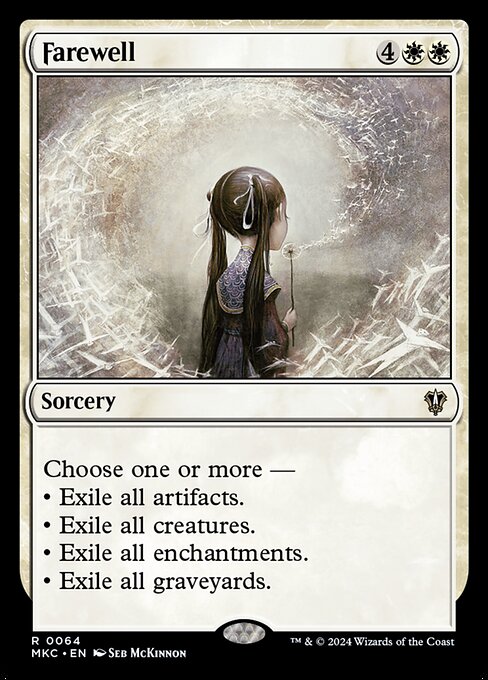
Where we might be stuck casting our commander and passing, or casting two cheap spells, our opponent can double spell with two 4MV spells, or cast an 8+ drop. It’s in a post-boardwipe rebuilding scenario, where synergy pieces have been removed, that the power of raw draw power and ramp is most evident. If you hit your land drops and go T1: one drop, T2: two drop, T3: commander, T4: four drop, T5: two drop + three drop, then get boardwiped, you just ate a 6 for 1. Without any form of card advantage, you now have 2 cards in hand.
Obviously this was a bit of a contrived scenario, but hopefully it gets my point across reasonably. Synergy-based curve-out strategies with no ramp, or decks that focus on sources of ramp that are susceptible to removal get set back hard from sweepers, while decks that have draw and land-based ramp recover far more quickly and scale much better into the late game that unfolds after sweepers are deployed. Presumably, your curve-out scenario was able to put some power and toughness on board and shift some life totals, but the ramp player who cast a ramp spell on 2, a ramp spell on 3, a creature, ramped again on 5, then ate the boardwipe has more cards in hand, more mana, and, presumably, higher-costed threats to deploy. Imagine now that the ramp player casts a seven mana Boundless Realms or Zendikar Resurgent, and next turn is looking at 18 mana to play with, and the high-mana value spells in their deck to make use of that mana.
To be clear, there are low-interaction, no-mass-disruption games where curving out, attacking early, and establishing an overwhelming board presence with low-costed synergy pieces will win you games. Cutting ramp will certainly net you more space in your deck for threats, interaction, and draw power.
Conclusions
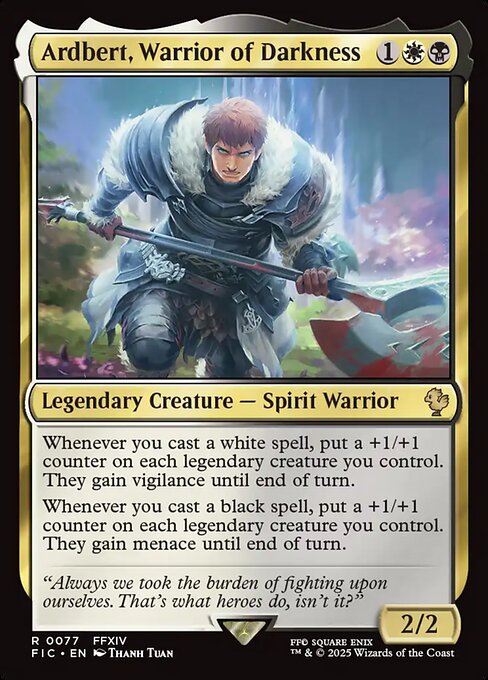
Speaking as a personal anecdote, I tried several decks that only “curve out” with minimal amounts of ramp, and found that my local play experiences were too sweeper-heavy for this to work out. My Ardbert, Warrior of Darkness deck is built on this principle, and it’s probably my worst-performing bracket 3 deck. Because its threats are so telegraphed and on-board, represented purely through density of bodies and power+toughness, and because it generates very little in the form of mana generation, it makes other players very trigger-happy when it comes to casting boardwipes. When this deck does win, it comes off of blanking a boardwipe with a mass protection spell like Clever Concealment or Flawless Maneuver. I would hazard a guess and say that 75%+ of my wins with this deck come from that play pattern, and not just curving out and overwhelming the board.
All in all, my experiences have led me to believe that eschewing non-land forms of permanent-based mana generation is unwise for most local metas, especially if they have a healthy amount of mass disruption. I’m curious to see how other people view this concept.